Cowboy Shaving Line Art Review: Practical Design for Real Projects
As an embroidery designer and product reviewer with years of hands-on experience, I’ve evaluated countless digital designs for their real-world usability. When I first opened the Cowboy Shaving Line Art files—SVG, PNG, EPS, JPG, and PDF—I immediately noticed a few key qualities that set it apart from generic graphics. This is not just another doodle or clipart; it has a distinct visual personality that suggests it could work well in various embroidery applications if handled with care.
First Impressions and Visual Personality
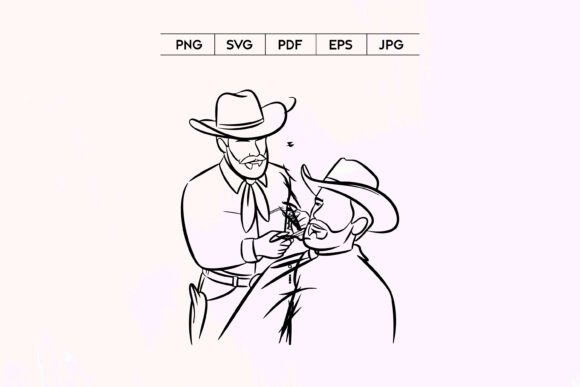
The Cowboy Shaving Line Art presents a whimsical yet grounded illustration of a cowboy with a razor in hand, capturing the essence of a Western-themed grooming scene. The line art is clean, deliberate, and stylized without being overly complex. It’s a design that feels like it belongs on a personalized gift, a custom sweatshirt, or even a boutique apron. Its charm lies in its simplicity and characterful details—the hat, the mustache, and the subtle lines around the eyes and mouth all contribute to a sense of humor and nostalgia.
I appreciate how the layout is balanced and compact. There are no sprawling elements that might require awkward trimming or resizing. The theme is playful but professional enough to fit into both personal and commercial projects. It’s clear this isn’t meant for high-detail realism but rather for expressive, illustrative embroidery where the story matters more than pixel-perfect accuracy.
Real-Life Embroidery Applications
Let’s talk about practical use. If I were preparing a custom embroidered tote bag for a local artisan market, the Cowboy Shaving Line Art would be a great candidate. Its bold outlines translate well into satin stitch, making it visually appealing on cotton canvas or linen blends. For a sweatshirt embroidery, especially in a front pocket placement, it adds a touch of personality without overwhelming the garment. It works similarly on tote bag design mockups and printable templates for digital product sellers.
In the context of handmade products, such as baby clothes or holiday gifts, this design can be reimagined as a small decorative patch or part of a larger composition. Its line-based nature makes it easy to integrate with other text or imagery, which is helpful when creating cohesive branding for a craft business. On items like aprons or pillow covers, it can serve as a central motif, especially when paired with complementary fonts or patterns.
What Stands Out?
- Scalability: The line art maintains clarity at different sizes, so it adapts well to smaller or larger hoop spaces.
- Embroidery file versatility: With multiple file formats included, it’s easy to manipulate for digitizing purposes or adding to existing compositions.
- Design consistency: The uniformity of the lines gives it a clean, finished look that aligns well with modern handmade aesthetics.
Where to Use It Carefully
While the Cowboy Shaving Line Art is charming and adaptable, there are situations where it may need some extra attention to ensure optimal results. Here are a few scenarios where caution is warranted:
- Small Hoop Sizes: If you plan to use it in a tiny format—like on a cap or a baby onesie—be sure to inspect the detail level closely. Some facial features may become less recognizable when scaled down too much.
- Textured or Stretchy Fabrics: Because of its fine lines and minimal shading, this design doesn’t hold up as well on stretchy materials or fabrics with heavy texture. A smooth base fabric will yield the best outcome.
- Dark Fabric Backgrounds: While the contrast of the line art against light backgrounds is strong, it may appear muted or washed out on darker fabrics unless thread colors are carefully chosen.
- Dense Stitch Areas: Avoid using it alongside very dense fill stitches, as the delicate lines may get lost in the overall texture.
- Products That Require Frequent Washing: As with any embroidery, frequent washing can cause fraying or fading in the threads, especially in thin or lightweight garments.
Stitching Clarity and Thread Color Contrast
When considering how this design will perform in an actual embroidery project, one thing stands out: the need for good thread color contrast. The line art relies heavily on outlines, so using a white or cream-colored thread on a dark fabric background will enhance visibility and maintain the intended style.
For those working on a personalized gift or a holiday embroidery item, testing it on scrap fabric before final stitching is essential. Pay close attention to how the lines behave during stitching—especially corners and curves. The design appears to have been created with a flat surface in mind, so applying it to curved areas like caps or sleeves may distort the shape slightly. In these cases, consider adjusting the placement or using a specialized digitizing tool to adapt the file accordingly.
Customer Reactions and Project Value
From a sales perspective, the Cowboy Shaving Line Art has a certain visual appeal that could attract customers looking for quirky, thematic designs. It’s the kind of machine embroidery design that Etsy buyers or craft fair attendees would recognize as unique and thoughtfully crafted. It also has the potential to elevate the perceived value of a small shop product, particularly if used in a limited-run collection or branded merchandise.
However, don’t underestimate the importance of presentation. If your customer expects something intricate and highly detailed, this design may not meet their expectations. But if they’re after something fun, simple, and instantly recognizable, it could be a hit. It’s also worth noting that while it looks great in monochrome, experimenting with colored thread (especially in the hat or beard) could add a pop of interest and make the finished product stand out more.
Professional and Brand Considerations
For creative entrepreneurs and brand owners, the Cowboy Shaving Line Art could be a valuable asset in building a cohesive brand identity. Think of it as a signature element for a line of Western-themed custom apparel or a recurring motif in printable mockups for digital product previews. It fits well within the category of casual, lifestyle-oriented illustrations and can help establish a consistent visual language across multiple items.
On the flip side, if your brand leans toward minimalist or ultra-modern styles, this design might feel a bit too nostalgic or cartoonish. It's always a good idea to test it in black-and-white versions and compare it to your current design assets to ensure it aligns with your brand’s tone and aesthetic.
Designer Notes and Best Practices
Here are a few tips I’d give fellow designers and hobbyists who want to use the Cowboy Shaving Line Art effectively:
- Test on Scrap Fabric First: Always try it out on a sample piece to see how it behaves under your machine’s settings.
- Review Stitch Density: Because the design is line-based, avoid over-densifying the stitch count, which can lead to puckering or distortion.
- Confirm Hoop Size: While the exact requirements aren’t specified, be mindful of how much space the design needs to render clearly. Resize accordingly based on your project.
- Inspect Small Details: Check the face and hands for clarity. These are often the focal points and should remain legible after stitching.
- Use Proper Stabilizer: Especially important if you're embroidering on stretchy or slippery fabrics. The right stabilizer helps keep the lines crisp and prevents misalignment.
- Check Licensing Before Selling: If you're planning to sell finished products or digital files, confirm the licensing terms to avoid legal issues down the line.
Final Thoughts on Usability and Appeal
Overall, the Cowboy Shaving Line Art is a solid choice for many embroidery projects, particularly those that lean into casual, illustrative styles. It brings a sense of humor and charm that can resonate well with customers, especially in niche markets like Western-themed apparel, personalized gifts, or seasonal items.
Its simplicity is both a strength and a limitation. It won’t demand a lot of time to digitize or adjust, but it also won’t wow with complexity. That said, for crafters, Etsy sellers, and apparel decorators who value efficiency and character, it hits the sweet spot. Just remember to match it with the right fabric, thread, and hoop size, and you’ll be well on your way to a successful embroidered patch or graphic on a tote.
Before integrating it into a production run or a major client project, take the time to evaluate it in context. Will it read clearly on the target material? Does it complement the rest of your design assets? Can it be resized without losing its charm? These are the kinds of questions every experienced embroiderer asks—and answering them upfront will save you time and effort later on.